
On this page
- Who has to yield
- Pedestrian deaths in the four states
- Tennessee and Memphis
- Tennessee: what the crosswalk statute says
- People on foot in Shelby County crashes
- Roads with the most pedestrian fatal crashes
- Evening and night
- Alabama: Code of Alabama, Title 32, Chapter 5A
- Oklahoma: Title 47, Chapter 11
- South Carolina: Title 56, Chapter 5
- After being hit
- Deadlines and insurance
- Questions
- Sources
The short answer
Who has to yield
At a crosswalk where traffic signals are not working or absent, Tennessee, Alabama, Oklahoma and South Carolina each say the driver must yield, slowing or stopping if need be, to a pedestrian crossing in the crosswalk [1] [4]. Each also bars a pedestrian from suddenly stepping into the path of a vehicle too close to yield [7]. If you were hit, call 911 first.
Deaths by state
Pedestrian deaths in the four states
These figures count people on foot who died in fatal crashes in the federal file. They are not a count of everyone hurt [2].
| Area | 2015 | 2019 | 2022 | 2024 | 2015-2024 | Share of all traffic deaths |
|---|---|---|---|---|---|---|
| United States | 5,494 | 6,272 | 7,593 | 7,080 | 66,370 | 17% |
| Tennessee | 104 | 148 | 209 | 158 | 1,508 | 13% |
| Alabama | 98 | 119 | 114 | 128 | 1,157 | 12% |
| Oklahoma | 70 | 85 | 96 | 77 | 835 | 12% |
| South Carolina | 123 | 163 | 172 | 156 | 1,643 | 16% |
Source: NHTSA FARS person files (person type pedestrian, fatal injury), analysed by CrashFirst; download the yearly CSV. The share is pedestrian deaths divided by all deaths in fatal crashes that year. Counts say nothing about fault in any crash.
Tennessee and Memphis
Tennessee and Memphis
Tennessee's rule is below, then the Shelby County figures from the same federal file.
Tennessee rule
Tennessee: what the crosswalk statute says
Tenn. Code Ann. § 55-8-134, as reproduced by FindLaw (current as of January 2, 2024; not yet re-read on the official code site):
- Drivers and crosswalks. Where traffic signals are absent or not working, a driver "shall yield the right-of-way, slowing down or stopping if need be to so yield" to a pedestrian in a crosswalk [1].
- School zones. With flashers operating in a marked school zone, drivers must stop for pedestrians in a marked crosswalk or an unmarked crosswalk at an intersection, and stay stopped until the pedestrian has crossed.
- Pedestrian duty. A pedestrian may not suddenly leave a curb or safe place into the path of a vehicle that cannot yield in time [1].
- Passing. A driver approaching from behind a vehicle stopped for a pedestrian may not overtake and pass it.
Tennessee also looks at each side's share of fault. See Is Tennessee a comparative fault state?. This page cannot tell you how those rules apply to your crash. The Memphis numbers follow. In the District of Columbia, a pedestrian or bicyclist hit by a motor vehicle is not barred by their own negligence unless it is greater than the defendants' combined; see the fault table.
Memphis data
People on foot in Shelby County crashes
These figures count deaths only, because that is what the federal file records in detail. They are not a count of everyone hurt.
| Measure (Shelby County, 2015-2024) | Value |
|---|---|
| Pedestrians killed | 487 (26% of all traffic deaths) |
| Worst year / latest year | 86 in 2022 / 48 in 2024 |
| Fatal crashes involving a pedestrian | 484 |
| ...in the dark | 80% (387 of 484); 66% (321) on a lighted road |
| ...where a driver left the scene | 40% (194 of 484) flagged as hit-and-run |
| ...on arterial streets | 79% (383 of 484) |
Source: NHTSA FARS, analysed by CrashFirst. The Memphis Crash Report explains the method and offers the full data as CSV. The hit-and-run flag is NHTSA's coding of a crash in which a vehicle left the scene.
Where
Roads with the most pedestrian fatal crashes
| Road (grouped by name) | Fatal crashes with a pedestrian, 2015-2024 |
|---|---|
| I-40 | 28 |
| South Third Street (US-61) | 22 |
| I-240 | 21 |
| Winchester Road | 21 |
| Jackson Avenue (SR-14) | 20 |
| Shelby Drive (SR-175) | 17 |
| Poplar Avenue (US-72) | 17 |
| Lamar Avenue (US-78) | 16 |
| Union Avenue | 15 |
| Summer Avenue (US-64/70) | 14 |
| Elvis Presley Boulevard (US-51) | 14 |
Counts show where crashes were recorded, which reflects traffic and road design as much as anything. They say nothing about who was at fault in any crash. See the most dangerous roads in Memphis for all road users.
When
Evening and night
Pedestrian fatal crashes cluster in the evening: 8 p.m. (60), 10 p.m. (54), 9 p.m. (45) and 7 p.m. (41) were the busiest hours in the 2015-2024 file. About half (234 of 484) fell on a Friday, Saturday or Sunday.
Alabama
Alabama: Code of Alabama, Title 32, Chapter 5A
Read on the Alabama Legislature's Code of Alabama site:
- Crosswalks (§ 32-5A-211). When traffic-control signals are not in place or not in operation, the driver must yield to a pedestrian crossing within a crosswalk on the driver's half of the roadway, or approaching closely enough from the other half to be in danger [4]. A pedestrian may not suddenly leave a curb into the path of a vehicle too close to yield [4]. A driver may not overtake and pass a vehicle stopped to let a pedestrian cross [4].
- Outside crosswalks (§ 32-5A-212). A pedestrian crossing at any point other than a marked crosswalk or an unmarked crosswalk at an intersection must yield to vehicles [5].
- Drivers' care (§ 32-5A-213). Every driver must exercise due care to avoid colliding with any pedestrian or first responder and take precaution around a child or an obviously confused, incapacitated or intoxicated person [6].
Alabama's contributory negligence rule affects how fault matters: see contributory negligence in Alabama.
Oklahoma
Oklahoma: Title 47, Chapter 11
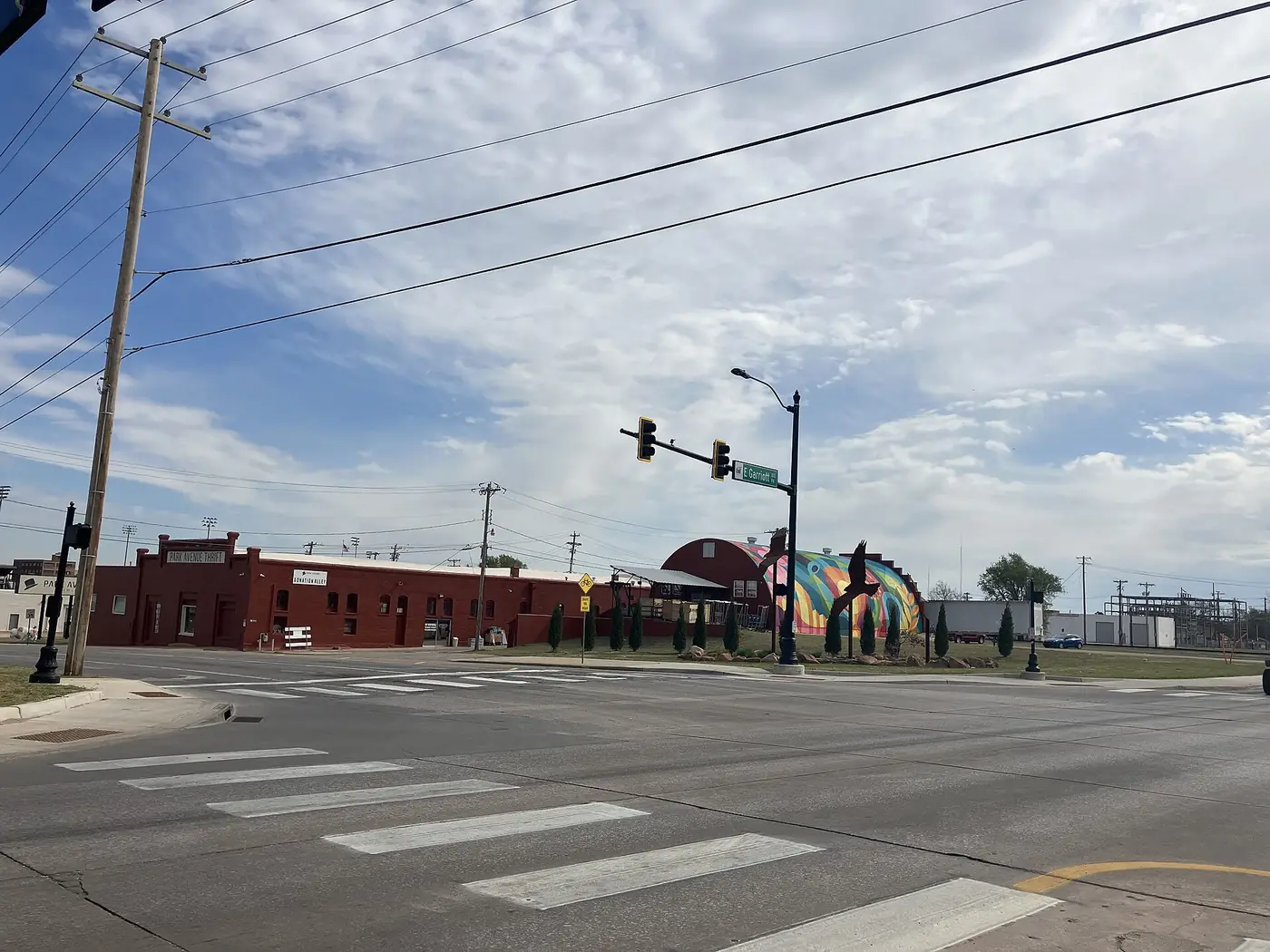

Read on the Oklahoma State Courts Network (OSCN):
- Crosswalks (§ 11-502). When signals are not in place or not in operation, the driver must yield to a pedestrian crossing within a crosswalk [7]. A pedestrian may not suddenly leave a curb into the path of a vehicle so close that it is impossible for the driver to yield [7]. A driver may not pass a vehicle stopped for a pedestrian [7].
- Outside crosswalks (§ 11-503). A pedestrian crossing other than in a marked crosswalk or an unmarked crosswalk at an intersection must yield to vehicles, and between intersections with working signals may cross only in a marked crosswalk [8].
- Drivers' care (§ 11-504). Every driver must exercise due care to avoid colliding with any pedestrian upon any roadway and give warning by sounding the horn when necessary [9].
See comparative fault in Oklahoma for how each side's share of fault is treated.
South Carolina
South Carolina: Title 56, Chapter 5
Read on the South Carolina Legislature's code site:
- Crosswalks (§ 56-5-3130). When traffic-control signals are not in place or not in operation, the driver must yield to a pedestrian crossing within a crosswalk [10]. A pedestrian may not suddenly leave a curb into the path of a vehicle so close as to constitute an immediate hazard, and a driver may not pass a vehicle stopped for a pedestrian [10].
- Outside crosswalks (§ 56-5-3150). A pedestrian crossing at any point other than a marked crosswalk or an unmarked crosswalk at an intersection must yield to vehicles, and may not cross diagonally unless authorized [10].
After being hit
If you can
Next
Deadlines and insurance
Each state sets its own deadline for a personal injury lawsuit, with exceptions: Tennessee, Alabama, Oklahoma and South Carolina. If the driver had no insurance or fled, see hit by an uninsured driver and hit and run: what to do. Bicycle crash? See bicycle accident.
Want to talk it through? A person usually calls you back in about 15 minutes (8am to 8pm Central). You never pay CrashFirst. CrashFirst is not a law firm, does not evaluate your crash and does not give legal advice. General information as of November 8, 2026.
Sources
- Tenn. Code Ann. § 55-8-134, pedestrians in crosswalks (FindLaw mirror, current as of Jan. 2, 2024) (checked November 9, 2026)Code text via FindLaw (unofficial copy)“shall yield the right-of-way, slowing down or stopping if need be to so yield”“No pedestrian shall suddenly leave a curb or other place of safety”
- NHTSA, Fatality Analysis Reporting System (FARS), 2015-2024 files (US, four states, Shelby County, TN) (checked November 9, 2026)Official source“FARS is a nationwide census providing NHTSA, Congress and the American public yearly data regarding fatal injuries suffered in motor vehicle traffic crashes”
- Tennessee Highway Safety Office (TITAN), County Rankings and Statistics 2021-2025 (checked November 9, 2026)Official source
- Ala. Code § 32-5A-211, pedestrians' right-of-way in crosswalks (Alabama Legislature) (checked November 9, 2026)Official source“shall yield the right-of-way, slowing down or stopping if need be to so yield, to a pedestrian crossing the roadway within a crosswalk”“when the pedestrian is upon the half of the roadway upon which the vehicle is traveling”“No pedestrian shall suddenly leave a curb or other place of safety and walk or run into the path of a vehicle which is so close as to constitute an immediate hazard”“the driver of any other vehicle approaching from the rear shall not overtake and pass such stopped vehicle”
- Ala. Code § 32-5A-212, crossing at other than crosswalks (Alabama Legislature) (checked November 9, 2026)Official source“shall yield the right-of-way to all vehicles upon the roadway”
- Ala. Code § 32-5A-213, drivers to exercise care (Alabama Legislature) (checked November 9, 2026)Official source“shall exercise proper precaution upon observing any child or any obviously confused, incapacitated, or intoxicated person”“every driver of a vehicle shall exercise due care to avoid colliding with any pedestrian”
- 47 O.S. § 11-502, pedestrians' right-of-way in crosswalks (Oklahoma State Courts Network) (checked November 9, 2026)Official source“No pedestrian shall suddenly leave a curb or other place of safety”“shall yield the right-of-way, slowing down or stopping if need be to so yield, to a pedestrian crossing the roadway within a crosswalk”“so close that it is impossible for the driver to yield”“shall not overtake and pass such stopped vehicle”
- 47 O.S. § 11-503, crossing at other than crosswalks (Oklahoma State Courts Network) (checked November 9, 2026)Official source“pedestrians shall not cross at any place except in a marked crosswalk”“shall yield the right-of-way to all vehicles upon the roadway”
- 47 O.S. § 11-504, drivers to exercise due care (Oklahoma State Courts Network) (checked November 9, 2026)Official source“shall give warning by sounding the horn when necessary”“every driver of a vehicle shall exercise due care to avoid colliding with any pedestrian upon any roadway”
- S.C. Code Ann. Title 56, Chapter 5, §§ 56-5-3130, 56-5-3150 (South Carolina Legislature) (checked November 9, 2026)Official source“shall yield the right-of-way, slowing down or stopping if need be to yield to a pedestrian crossing the roadway within a crosswalk”“shall not overtake and pass such stopped vehicle”“shall yield the right-of-way to all vehicles upon the roadway”
Unofficial copies come from a legal publisher, not the state. They can lag the current code, so check the official code before relying on a date or amount.
Page last updated November 9, 2026. Attorney review pending. General information, not legal advice. Fees, hours and rules change; confirm on the official page. How we source.
Questions
Does a driver have to yield to a pedestrian?
Yes, at a crosswalk when traffic signals are not working or absent. Tennessee, Alabama, Oklahoma and South Carolina use nearly the same wording: the driver must yield the right-of-way, slowing down or stopping if need be, to a pedestrian crossing in a crosswalk [1] [4] [7] [10].
Who has the right of way, a pedestrian or a driver?
It depends on where the pedestrian is. In a crosswalk with no working signal, the driver must yield. Outside a marked crosswalk or an unmarked crosswalk at an intersection, a pedestrian must yield to vehicles [5] [8] [10]. Drivers must still use due care [6] [9].
How many pedestrians die in car crashes each year?
NHTSA's FARS counts 66,370 pedestrian deaths in the US from 2015 to 2024, peaking at 7,593 in 2022 and 7,080 in 2024, about 17% of all traffic deaths. Tennessee had 1,508, Alabama 1,157, Oklahoma 835 and South Carolina 1,643 over the same years [2]. Counts are deaths in fatal crashes only.
How many pedestrians die in crashes in Memphis and Shelby County?
NHTSA's FARS counts 487 pedestrian deaths in Shelby County from 2015 to 2024, 26% of all traffic deaths there. The yearly count peaked at 86 in 2022 and was 48 in 2024.
When do pedestrian crashes happen in Memphis?
80% of fatal crashes involving a pedestrian happened in the dark (387 of 484), including 66% on roads that had lighting. The busiest hours were 8 p.m. to 11 p.m.
Which Memphis roads have the most pedestrian fatal crashes?
By our grouping of FARS road names, I-40 (28), South Third Street (22), I-240 (21), Winchester Road (21) and Jackson Avenue (20) lead the 2015-2024 list. A crash happening on a road does not say who was at fault.
Does a driver have to yield to a pedestrian in Tennessee?
Under Tenn. Code Ann. § 55-8-134(a), where traffic signals are not working or absent, a driver must yield to a pedestrian in a crosswalk, slowing or stopping if needed [1]. Pedestrians may not step suddenly into the path of a vehicle that cannot yield (subsection (b)) [1].
How long do you have to file after being hit as a pedestrian?
Each state sets its own deadline, with exceptions. Tennessee's usual deadline for a personal injury lawsuit is one year (Tenn. Code Ann. § 28-3-104); see the Tennessee, Alabama, Oklahoma and South Carolina pages. General information, not legal advice.
CrashFirst is not a law firm and does not give legal advice. This checklist is general information. Every situation is different.
Keep reading
- Guide
What to do after a crash.
A calm, ordered checklist for the scene, today, the next 72 hours and the next few weeks. Tick it off here or print it for the glove box.
Open - Guide
What to do after a hit and run
Driver duties after a crash in Tennessee, Alabama, Oklahoma and South Carolina as the statutes read, who to report to, how uninsured motorist coverage treats a driver who left, and a checklist.
Open - Guide
Bicycle accident: the laws and the numbers.
Bicycle laws in Tennessee, Alabama, Oklahoma and South Carolina, plus federal data on bicyclist deaths by year and state, where and when they happen, and what to do after a crash.
Open - Report
The Memphis Crash Report 2026.
Where, when and to whom serious crashes happen in Memphis and Shelby County, from NHTSA FARS (2015-2024) and Tennessee TITAN (2021-2025) data. Charts and CSVs.
Open - Report
Car accident statistics by state: fatal crashes and deaths, 2015-2024.
Traffic deaths in every state and DC from NHTSA FARS, per 100,000 residents and per 100 million miles, with Tennessee, Alabama, Oklahoma and South Carolina marked. CSVs.
Open - City guide
Most dangerous roads in Memphis: where fatal crashes happen
Which Memphis roads had the most fatal crashes 2015-2024: I-240, I-40, Shelby Dr and more. Times, pedestrians, charts and a free CSV from NHTSA and TITAN data.
Open