
On this page
- If the driver left
- Tennessee: what the law requires
- Hit-and-run in Shelby County fatal crashes
- Alabama: Code of Alabama, Title 32, Chapter 10
- Oklahoma: Title 47, Chapter 10
- South Carolina: Title 56, Chapter 5
- If the driver is never found: your uninsured motorist coverage
- What to record
- Deadlines
- Questions
- Sources
The short answer
If the driver left
Tennessee, Alabama, Oklahoma and South Carolina all require a driver in a crash that hurts someone to stop at or near the scene, stay, give a name, address and vehicle registration number, and help the injured [1] [6]. A driver who leaves is what people call hit and run. If you are hurt, call 911 first. The sections below give each state's duties as written, and the penalties are on is hit and run a felony.
| State | Stop and stay (injury crash) | Whom the driver must notify |
|---|---|---|
| Tennessee | Stop at or near the scene and remain. § 55-10-101 [1]. | See the Tennessee section below. |
| Alabama | Stop and remain until the § 32-10-2 duties are done [6]. | Local police in a municipality; otherwise county sheriff or state highway patrol [8]. |
| Oklahoma | Stop and remain until the § 10-104 duties are done [9]. | Local police in a municipality; otherwise county sheriff or State Highway Patrol [13]. |
| South Carolina | Stop and remain; may temporarily leave to report it to the proper authorities [14]. | Local police in a municipality; otherwise county sheriff or Highway Patrol [14]. |
We cover the driver's duties as the statutes read, not what a prosecutor or court will do in any case.
Tennessee
Tennessee: what the law requires
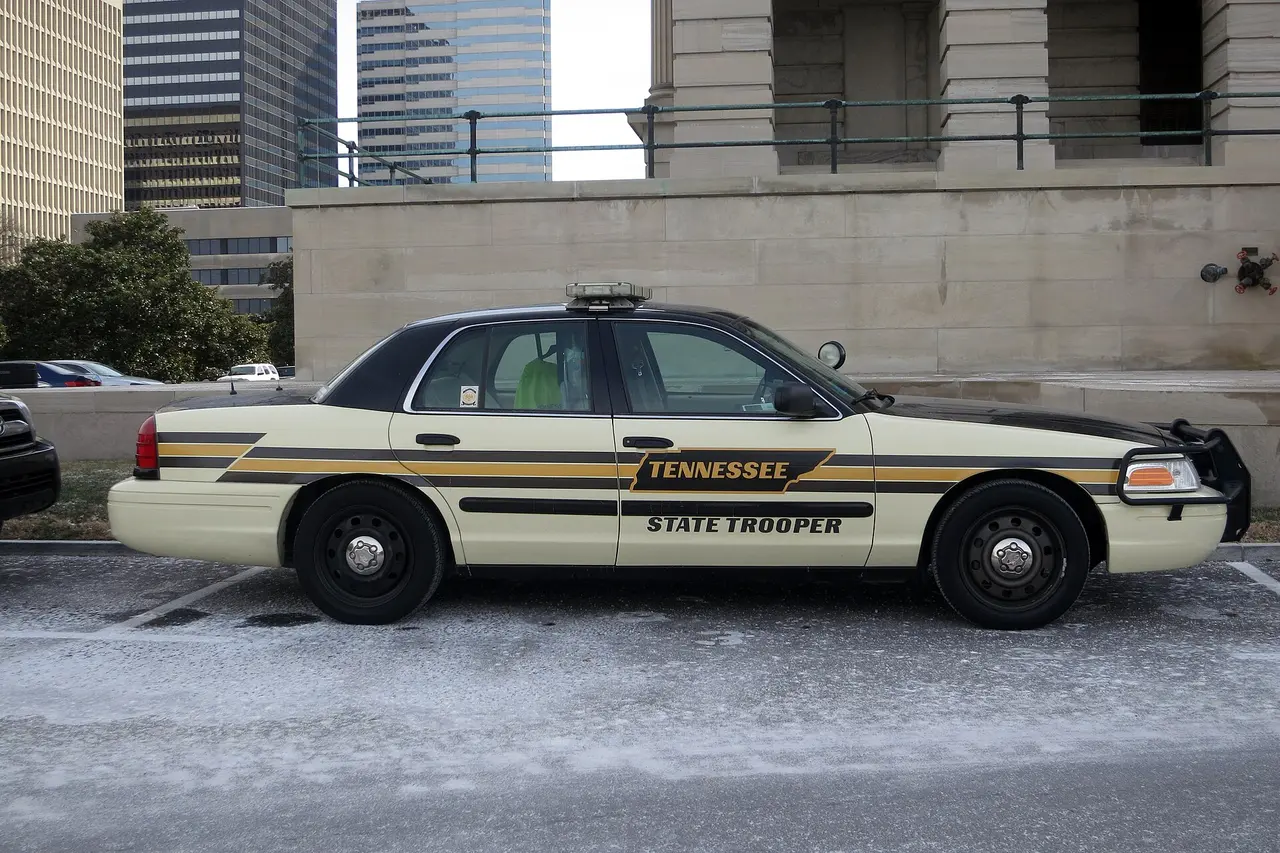

Statutes as reproduced by FindLaw, current as of January 2, 2024 (we have not yet re-read them on the official code site):
| Section | What it says |
|---|---|
| § 55-10-101 | A driver in a crash causing injury or death must "immediately stop the vehicle at the scene of the accident or as close to the scene as possible" and stay until the § 55-10-103 duties are met [1] [1]. It applies on roads and on premises generally open to the public, such as shopping centers. Violation is a Class A misdemeanor; a Class E felony if the person knew or should reasonably have known death resulted [1] [1]. A convicted person's license is revoked. |
| § 55-10-102 | A driver in any accident must stop immediately at the scene [2]. Where all parties agree there is only vehicle damage and no suspected injury, everyone stays until § 55-10-103 is met [2]. |
| § 55-10-103 | The driver must give name, address and vehicle registration number, show a driver license if asked, and give reasonable assistance to anyone injured, including getting them to a doctor or hospital, or arranging it, when treatment appears necessary or is requested [3] [3]. |
For reporting a crash in Tennessee, see Tennessee crash reporting rules. We cover the driver's duties, not what a prosecutor or court will do in any case.
Memphis data
Hit-and-run in Shelby County fatal crashes
| Measure (Shelby County, 2015-2024) | Value |
|---|---|
| Fatal crashes flagged hit-and-run | 283 of 1,755 (16%) |
| By year | 10 in 2015, 45 in 2020 (peak), 31 in 2024 |
| ...where a pedestrian was struck | 194 of 283 (69%); that is 40% of all 484 fatal pedestrian crashes |
| ...with a known hour, from 8 p.m. to 4 a.m. | 57% (157 of 275) |
| ...inside Memphis (FARS city code) | 276 of 283 |
Source: NHTSA FARS, analysed by CrashFirst; method and CSV in the Memphis Crash Report. The flag is NHTSA's coding of a vehicle that left the scene. These are fatal crashes only, not every hit-and-run.
Alabama
Alabama: Code of Alabama, Title 32, Chapter 10
Read on the Alabama Legislature's Code of Alabama site:
- Stop and stay (§ 32-10-1). A driver in an accident with injury or death, or damage to a vehicle driven or attended by any person, must stop "at the accident scene or as close thereto" and return to or remain there until the § 32-10-2 requirements are met [6]. If nobody appears hurt and the driver is not impaired, the driver may move a drivable vehicle to a safe place nearby [6]. A vehicle in a crash with injury or death may not be moved until a law enforcement officer directs it [6].
- Give information and help (§ 32-10-2). The driver must give name, address and vehicle registration number, show a driver's license on request, and give reasonable assistance to an injured person, including transport to a physician or hospital if it is apparent treatment is necessary or the injured person asks [7].
- Notify police (§ 32-10-5). After an injury or death crash the driver must give notice "by the quickest means of communication" to the local police in a municipality, otherwise the county sheriff or the state highway patrol [8].
See Alabama crash reporting rules for what the state asks of those involved. Penalties are covered on is hit and run a felony.
Oklahoma
Oklahoma: Title 47, Chapter 10
Read on the Oklahoma State Courts Network (OSCN):
- Injury, no death (§ 10-102). The driver must stop at the scene "or as close thereto as possible" and remain until the § 10-104 requirements are met, stopping without blocking traffic more than necessary [9].
- Death (§ 10-102.1). The same stop-and-remain duty applies when an accident results in death [10].
- Property or vehicle damage (§ 10-103). The driver of a vehicle in a crash damaging property or a vehicle that is driven or attended by any person must stop at or return to the scene and remain until § 10-104 is met [11].
- Give information and help (§ 10-104). The driver must give a correct name, address and registration number, show a driver license and security verification form on request, and give reasonable assistance to the injured [12]. Intentionally inaccurate information falls under § 10-103 [12].
- Notify police (§ 10-107). After an injury or death crash, the driver must immediately give notice by the quickest means, after complying with the § 10-104 duties [13].
See Oklahoma crash reporting rules. Penalties are covered on is hit and run a felony.
South Carolina
South Carolina: Title 56, Chapter 5
Read on the South Carolina Legislature's code site:
- Injury or death (§ 56-5-1210). The driver must stop at the scene or as close as possible, return and in every event remain until the § 56-5-1230 requirements are met, but may temporarily leave to report the accident to the proper authorities [14]. Moving a vehicle in a crash with great bodily injury or death needs the investigating officer's authorization [14].
- Damage to an attended vehicle (§ 56-5-1220). The same stop-and-remain duty applies when a crash damages a vehicle that is driven or attended by a person [14].
- Give information and help (§ 56-5-1230). The driver must give name, address and vehicle registration number, show a license on request if available, and give reasonable assistance to anyone injured [14].
- Unattended vehicle (§ 56-5-1240). A driver who hits an unattended vehicle must stop and either notify the owner or leave a written notice with name, address and the circumstances in a conspicuous place [14].
- Report (§ 56-5-1260). After an injury or death crash, the driver must immediately give notice to the local police in a municipality, otherwise the county sheriff or the nearest South Carolina Highway Patrol office [14].
See South Carolina crash reporting rules. Penalties are covered on is hit and run a felony.
Insurance
If the driver is never found: your uninsured motorist coverage
Your own uninsured motorist (UM) coverage is where an unidentified driver may come up. States write the rule differently, as read:
- Oklahoma. UM must cover insureds legally entitled to recover from "owners or operators of uninsured motor vehicles and hit-and-run motor vehicles." (36 O.S. § 3636(B)) [15]. Insureds may reject UM in writing [15].
- South Carolina. "A motor vehicle is considered uninsured if the owner or operator is unknown," with recovery subject to the chapter's conditions (§ 38-77-30(14)) [16].
- Tennessee. If the owner or operator is unknown, the insured has no UM right to recover unless there was actual physical contact or the unknown motorist is shown by clear and convincing evidence other than occupants' evidence, the accident was reported to law enforcement within a reasonable time, and the insured was not negligent in failing to identify the other vehicle (§ 56-7-1201(e)) [17].
- Alabama. § 32-7-23 requires UM coverage unless the named insured rejects it and lists examples of uninsured vehicles, none naming a driver who cannot be identified [18]. Ask your insurer how your policy treats an unidentified driver.
Whether your policy pays collision or other claims is a question for your policy and insurer. More in hit by an uninsured driver.
What to record
If the driver left
Deadlines
Deadlines
Each state sets its own deadline for a personal injury lawsuit, with exceptions: Tennessee, Alabama, Oklahoma and South Carolina. See also deadlines by state. We cannot tell you how a deadline applies to your crash, including when the driver has not been identified.
Want to talk it through? A person usually calls you back in about 15 minutes (8am to 8pm Central). You never pay CrashFirst. CrashFirst is not a law firm, does not evaluate your crash and does not give legal advice. General information as of November 8, 2026.
Sources
- Tenn. Code Ann. § 55-10-101, duty to stop after an accident with injury or death (FindLaw mirror, current as of Jan. 2, 2024) (checked November 9, 2026)Code text via FindLaw (unofficial copy)“shall immediately stop the vehicle at the scene of the accident or as close to the scene as possible”“shall remain at the scene of the accident”“A violation of subsection (a) is a Class A misdemeanor”“the person knew or should reasonably have known that death resulted from the accident”
- Tenn. Code Ann. § 55-10-102, duty to stop, damage only (FindLaw mirror) (checked November 9, 2026)Code text via FindLaw (unofficial copy)“shall immediately stop the vehicle at the scene of the accident”“After all parties have determined and agreed that there is only damage to the vehicles”
- Tenn. Code Ann. § 55-10-103, duty to give information and render aid (FindLaw mirror) (checked November 9, 2026)Code text via FindLaw (unofficial copy)“give the driver's name, address and the registration number of the vehicle the driver is driving”“render to any person injured in the accident reasonable assistance”“if it is apparent that treatment is necessary or if carrying is requested by the injured person”
- Memphis Police Dept., home page (non-emergency line) (checked November 9, 2026)Official source“Non-Emergency: 901-545-2677 (COPS)”
- NHTSA, Fatality Analysis Reporting System (FARS), 2015-2024 files (Shelby County, TN) (checked November 9, 2026)Official source
- Ala. Code § 32-10-1, duties of driver involved in accident (Alabama Legislature) (checked November 9, 2026)Official source“shall immediately stop the vehicle at the accident scene or as close thereto”“shall return to or remain at or as close to the scene of the accident”“shall return to or remain at or as close to the scene of the accident until he or she has fulfilled the requirements of Section 32-10-2”“may immediately move the vehicle from the roadway to the shoulder, emergency lane, median, or other location close to the accident site”“may not be moved until directed by a law enforcement officer”
- Ala. Code § 32-10-2, duty to give information and render aid (Alabama Legislature) (checked November 9, 2026)Official source“shall render to any person injured in such accident reasonable assistance”“shall give his name, address and the registration number of the vehicle he is driving”
- Ala. Code § 32-10-5, immediate reports of accidents (Alabama Legislature) (checked November 9, 2026)Official source“to the office of the county sheriff or to the state highway patrol”“shall immediately by the quickest means of communication give notice of such accident”“give notice of such accident to the local police department if such accident occurs within a municipality; otherwise to the office of the county sheriff or to the state highway patrol”“give notice of such accident to the local police department if such accident occurs within a municipality”
- 47 O.S. § 10-102, accident with nonfatal injury, failure to stop (Oklahoma State Courts Network) (checked November 9, 2026)Official source“in every event shall remain at the scene of the accident”“shall immediately stop such vehicle at the scene of such accident or as close thereto as possible”
- 47 O.S. § 10-102.1, accident resulting in death, failure to stop (Oklahoma State Courts Network) (checked November 9, 2026)Official source“in every event shall remain at the scene of the accident until he has fulfilled the requirements of Section 10-104 of this title”
- 47 O.S. § 10-103, property damage, driver to remain (Oklahoma State Courts Network) (checked November 9, 2026)Official source“shall immediately stop at the scene of the accident or as close to the scene of the accident as possible or shall immediately return to the scene of the accident”
- 47 O.S. § 10-104, duty to give information and render aid (Oklahoma State Courts Network) (checked November 9, 2026)Official source“shall upon request exhibit his or her driver license and his or her security verification form”“Any driver who provides information required by this section which is intentionally inaccurate”“shall give his or her correct name, address and registration number of the vehicle he or she is driving”
- 47 O.S. § 10-107, immediate notice of accident (Oklahoma State Courts Network) (checked November 9, 2026)Official source“or to the office of the county sheriff or the nearest office of the State Highway Patrol”“shall immediately, by the quickest means of communication, give notice of such accident”“give notice of such accident to the local police department, if such accident occurs within a municipality, or to the office of the county sheriff or the nearest office of the State Highway Patrol”“give notice of such accident to the local police department, if such accident occurs within a municipality”
- S.C. Code Ann. Title 56, Chapter 5, §§ 56-5-1210 to 56-5-1260 (South Carolina Legislature) (checked November 9, 2026)Official source“he may temporarily leave the scene to report the accident to the proper authorities”“otherwise to the office of the county sheriff or the nearest office of the South Carolina Highway Patrol”“in every event shall remain at the scene of the accident until he has fulfilled the requirements of Section 56-5-1230”“the vehicle shall not be moved until it is authorized by the investigating law enforcement officer”“resulting only in damage to a vehicle which is driven or attended by a person immediately shall stop the vehicle at the scene of the accident”“shall render to any person injured in such accident reasonable assistance”“shall leave in a conspicuous place in the vehicle struck a written notice”“immediately by the quickest means of communication, whether oral or written”“immediately shall stop the vehicle at the scene of the accident or as close to it as possible”“give notice of such accident to the local police department if such accident occurs within a municipality, otherwise to the office of the county sheriff or the nearest office of the South Carolina Highway Patrol”“may temporarily leave the scene to report the accident to the proper authorities”“shall give his name, address and the registration number of the vehicle he is driving”“give notice of such accident to the local police department if such accident occurs within a municipality”
- 36 O.S. § 3636, uninsured motorist coverage (Oklahoma State Courts Network) (checked November 9, 2026)Official source“legally entitled to recover damages from owners or operators of uninsured motor vehicles and hit-and-run motor vehicles”“A named insured or applicant shall have the right to reject uninsured motorist coverage in writing”“hit-and-run motor vehicles”
- S.C. Code Ann. Title 38, Chapter 77, §§ 38-77-30, 38-77-150 (South Carolina Legislature) (checked November 9, 2026)Official source“A motor vehicle is considered uninsured if the owner or operator is unknown”“However, recovery under the uninsured motorist provision is subject to the conditions set forth in this chapter”“owner or operator is unknown”
- Tenn. Code Ann. § 56-7-1201, uninsured motorist coverage (FindLaw mirror, current as of Jan. 2, 2024) (checked November 9, 2026)Code text via FindLaw (unofficial copy)“Actual physical contact has occurred between the motor vehicle owned or operated by the unknown person and the person or property of the insured”“If the owner or operator of any motor vehicle that causes bodily injury or property damage to the insured is unknown, the insured shall have no right to recover under the uninsured motorist provision unless”“has reported the accident to the appropriate law enforcement agency within a reasonable time after its occurrence”“The insured was not negligent in failing to determine the identity of the other vehicle and the owner or operator of the other vehicle at the time of the accident”
- Ala. Code § 32-7-23, uninsured motorist coverage (Alabama Legislature) (checked November 9, 2026)Official source“The term uninsured motor vehicle shall include, but is not limited to”
- Memphis Police Dept., online report system, incident types (linked from memphispolice.org as File a Report online) (checked November 9, 2026)Official source“Leaving the scene of an accident without providing required license, insurance or vehicle information”“If the incident you are reporting has a known suspect, you should instead call us”
Unofficial copies come from a legal publisher, not the state. They can lag the current code, so check the official code before relying on a date or amount.
Page last updated November 9, 2026. Attorney review pending. General information, not legal advice. Fees, hours and rules change; confirm on the official page. How we source.
Questions
What does hit and run mean?
In the statutes it is a driver in a crash leaving without doing what the law requires. Tennessee, Alabama, Oklahoma and South Carolina each require the driver to stop at or near the scene and remain until they have given their information and helped anyone hurt [1] [6] [9] [14]. The penalties are on is hit and run a felony.
How do I report a hit and run?
Call 911 if anyone is hurt or in danger. A driver in an injury crash must notify the local police in a city, otherwise the county sheriff or the state highway patrol. Alabama says so in § 32-10-5, [8] Oklahoma in § 10-107, [13] and South Carolina in § 56-5-1260 [14]. Those sections tell the driver whom to notify; a victim can use the same agencies. For Memphis, MPD lists a non-emergency number in the Memphis section below. Each state's reporting page is linked in the sections below.
How do I report a hit and run online?
We have not found a statewide online hit-and-run form. In Memphis, the police department links an online report system whose list of incident types includes Hit and Run, described as "Leaving the scene of an accident without providing required license, insurance or vehicle information." [19] The same page says "If the incident you are reporting has a known suspect, you should instead call us." [19] Call 911 if anyone is hurt. Other agencies differ: check the website of the police department or sheriff for where the crash happened, or call their non-emergency line. Use the crash report finder to get a copy of a report once it exists.
Does insurance cover a hit and run?
It depends on the policy and the state. Uninsured motorist (UM) coverage is the usual place to look. Oklahoma's statute names hit-and-run vehicles outright [15]. South Carolina treats a vehicle as uninsured if the owner or operator is unknown [16]. Tennessee allows an unknown-driver claim only when conditions are met, including physical contact or clear and convincing proof [17]. Whether collision coverage pays for car damage is set by your policy, which we have not sourced here.
Does uninsured motorist coverage cover a hit and run?
In Oklahoma, the statute says UM coverage protects insureds who can recover from hit-and-run motor vehicles [15]. In South Carolina an unknown owner or operator makes the vehicle count as uninsured, subject to the chapter's conditions [16]. Tennessee requires contact or clear and convincing proof, a timely police report and no negligence in failing to identify the driver [17]. The Alabama definition in § 32-7-23 lists examples of uninsured vehicles but does not mention hit-and-run drivers, so read your policy [18].
Is a hit-and-run considered an uninsured motorist?
Some states say so in their uninsured motorist statutes (Oklahoma names hit-and-run vehicles; South Carolina counts a vehicle with an unknown owner or operator as uninsured), and some set conditions (Tennessee). The answer in your policy controls. See hit by an uninsured driver [15] [16].
What must a driver do after a crash?
The statutes list several duties, and most depend on a condition. (1) Stop at or near the scene and stay: after a crash with injury or death, Tennessee says the driver "shall immediately stop the vehicle at the scene of the accident or as close to the scene as possible." [1] Alabama, Oklahoma and South Carolina each have a matching duty to stop at or near the scene [6] [9] [14]. South Carolina's section adds that the driver "may temporarily leave the scene to report the accident to the proper authorities." [14] Crashes with only vehicle damage have their own stop sections. (2) Give information: in a crash with injury or death, or damage to a vehicle that is driven or attended, the driver must give name, address and vehicle registration number, and show a driver license on request [3] [7] [12] [14]. (3) Help anyone injured: Alabama says the driver "shall render to any person injured in such accident reasonable assistance," [7] which in the sections we read includes carrying the person to a doctor or hospital, or arranging it, if treatment is apparent or the injured person asks [3]. (4) Notify police: when a crash injures or kills someone, Alabama, Oklahoma and South Carolina require immediate notice to the local police, the sheriff or the highway patrol [8] [13] [14]. The three Tennessee sections cited on this page do not state a duty to notify police, and we have not read the Tennessee reporting statute for this page. Details are on each state's reporting page and on is hit and run a felony.
Is leaving the scene of a crash a crime in Tennessee?
Under Tenn. Code Ann. § 55-10-101, a driver in a crash causing injury or death must stop at or near the scene and stay until the duties in § 55-10-103 are done; a violation is a Class A misdemeanor, and a Class E felony if the person knew or should have known someone died [1] [1]. Damage-only crashes have a similar stop duty in § 55-10-102 [2].
How common is hit-and-run in Memphis?
NHTSA's FARS flags 283 of 1,755 Shelby County fatal crashes from 2015 to 2024 (16%) as hit-and-run. The yearly count rose from 10 in 2015 to 45 in 2020 and was 31 in 2024.
Who do I report a hit-and-run to in Memphis?
Call 911 if anyone is hurt or in danger. For a report after the fact, MPD's non-emergency line is 901-545-2677 [4]. Use the agency named on any card you were given.
What if the driver is never found?
Whether your own policy or state law treats an unidentified driver like an uninsured one differs by state; see the insurance section below. Tennessee's rule is in Tenn. Code Ann. § 56-7-1201(e) [17]. Read your policy's definition of an uninsured vehicle or ask your insurer.
CrashFirst is not a law firm and does not give legal advice. This checklist is general information. Every situation is different.
Keep reading
- Guide
What to do after a crash.
A calm, ordered checklist for the scene, today, the next 72 hours and the next few weeks. Tick it off here or print it for the glove box.
Open - Guide
Is hit and run a felony? What four state statutes say
What the statutes say about leaving the scene of a crash in Tennessee, Alabama, Oklahoma and South Carolina: when it is a felony, when a misdemeanor, quoted from the code.
Open - Guide
What to do if you are hit by an uninsured driver
What to do if the other driver has no insurance, how uninsured motorist coverage reads in Tennessee, Alabama, Oklahoma and South Carolina, and how common uninsured drivers are. Sourced.
Open - Guide
What to do if you are hit by a car while walking
Pedestrian and driver rules at crosswalks in Tennessee, Alabama, Oklahoma and South Carolina as the statutes read, pedestrian deaths by state from federal data, and the Memphis numbers.
Open - Tool
Find your crash report.
Pick where the crash happened in Memphis, Birmingham, Tulsa or Columbia to see which agency likely has your report and how to request it. Each row shows its source.
Open - State reference
Do you have to report a car accident in Tennessee?
Tennessee's duties after a crash: stay, notify police, and file the Owner/Driver Report within 20 days. $1,500 threshold, with statutes. Nov 2026.
Open