
The word
"Totaled" has two meanings
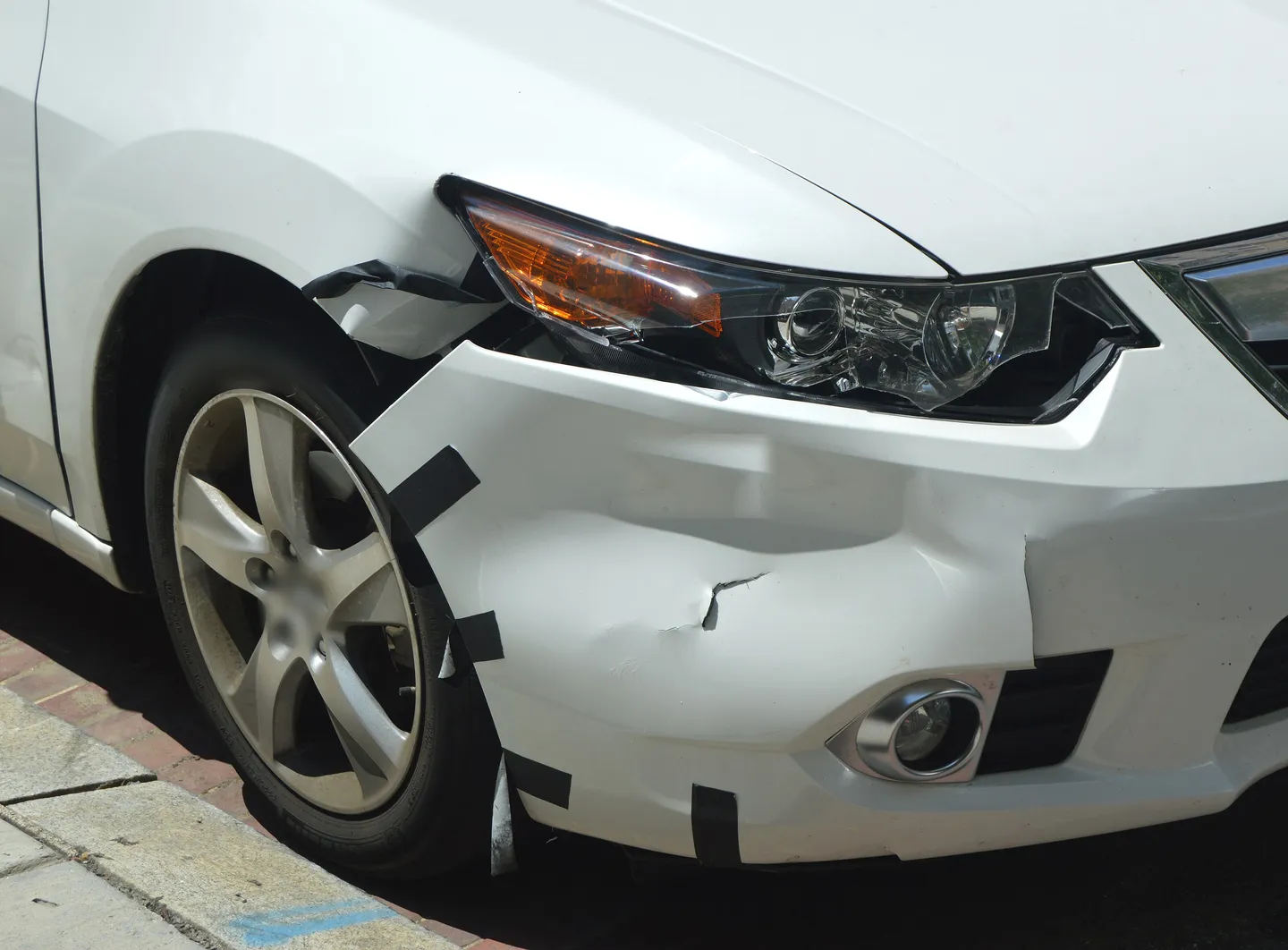

When people say a car was totaled, they usually mean the insurance company decided to pay out the car's value instead of paying for repairs. States also use a percentage line when they decide how a damaged car is titled and reported. The two are related but they are not the same rule. The line below is the state's title and reporting line; what your insurer pays is figured under a separate set of rules, covered further down.
Four states
Where each state draws the title line
- Oklahoma title line (more than 70%)
- Tennessee, Alabama, South Carolina title line (75%)
- These are title lines, not what the insurer pays.
| State | Title or reporting line | Where it is written |
|---|---|---|
| Tennessee | A "salvage vehicle" is a passenger motor vehicle whose cost of parts and labor to rebuild it "exceeds seventy-five percent (75%) of the retail value." [1] | Tenn. Code Ann. § 55-3-201(11)(A). The statute covers a "passenger motor vehicle" that is ten model years old or less. |
| Alabama | A total loss occurs when a payment is made and the damage is "greater than or equal to 75 percent of the fair retail value." [3] | Ala. Code § 32-8-87(d)(1). Payments for medical care, bodily injury or vehicle rental are not counted [3]. |
| Oklahoma | When an insurer pays less than a total loss but the repair cost for safe operation "exceeds seventy percent (70%) of the fair market value," the title holder returns the title and a salvage title is issued [5]. | Title 47, Payment of Total Loss Claim (§ 1111B). The section defines fair market value as the guidebook value or the actual cash value, whichever is greater. |
| South Carolina | A "salvage vehicle" and a "vehicle declared to be a total loss" are synonyms for a vehicle whose repair cost equals or exceeds "seventy-five percent of the fair market value." [7] | S.C. Code § 56-19-480(G). It does not apply to a vehicle worth $2,000 or less. The SCDMV adds that insurers can choose to declare a total loss below 75 percent [8]. |
Two things to notice. The lines are not the same number, and in every state they compare repair cost with the car's value, so a higher valuation changes where a car falls. Also, Tennessee's definition is written for the title; nothing we read says an insurer must wait for the percentage before it calls a car a total loss.
The payout
How the payout is figured
All four states have rules about a first-party total loss, meaning a claim on your own policy that pays on actual cash value or replacement with a car of like kind and quality. We read the text of the Tennessee, Alabama and Oklahoma rules; South Carolina is covered at the end of this section.
Tennessee (Tenn. Comp. R. & Regs. 0780-01-05-.09). The insurer may offer a comparable replacement car, or a cash settlement based on the actual cost, less any deductible, of buying a comparable car. The cost may come from two or more comparable cars in the local market (available within the last ninety days), from comparable cars in nearby areas, from dealer quotes, or from a database that gives primary consideration to local values and produces values for at least eighty-five percent of makes and models for fifteen model years [2]. A settlement that departs from those methods needs written support, and deductions "must be as specific as reasonably possible" with the basis explained to you [2].
Alabama (Rule 482-1-125-.08). The insurer may offer a comparable replacement, or a cash settlement based on the cost of a comparable car by the same maker, model year, body style and condition. The rule limits the tax and fee amount: it "shall be limited to the amount that would have been paid on the totaled, insured vehicle at the time of settlement." [4] Deductions from the cost must be "measurable, discernible, itemized and specified as to dollar amount." [4]
Oklahoma (36 O.S. § 1250.8). The insurer may offer a specific comparable replacement car or a cash settlement based on the cost of a comparable car, which may be determined by a comparable car in the local market in the prior ninety days, dealer quotes, or the National Automobile Dealers Association Official Used Car Guide or another nationally recognized guidebook [6]. A settlement on any other basis needs documentation, and any deductions must be "measurable, discernible, itemized and specified as to dollar amount." [6]
South Carolina. The DMV page and § 56-19-480 say how a total loss is determined for the title: with an insurer involved, the fair market value is set "as of the date immediately before the event which gave rise to the claim." [8] We did not find or verify a South Carolina insurance-department rule that sets the valuation method for the payout, so we state none.
These rules describe what an insurer must document and which sources it may use. They do not tell you what any particular car is worth, and we do not estimate it.
Worked example
The same repair bill, four different title lines
Say a car was worth $10,000 just before the crash. This is arithmetic on the rules above, using round numbers only; it is not a valuation of any real car.
| State | Title line on a $10,000 car | A $7,200 repair bill is... |
|---|---|---|
| Tennessee | More than 75 percent, so over $7,500 | Under the line |
| Alabama | 75 percent or more, so $7,500 or more | Under the line |
| Oklahoma | More than 70 percent, so over $7,000 | Over the line |
| South Carolina | 75 percent or more, so $7,500 or more | Under the line |
Tennessee adds a limit the others do not: its definition covers only a passenger motor vehicle that is ten model years old or less. If the $10,000 car in this example is eleven model years old, Tennessee's 75 percent salvage-vehicle line would not apply to it under that definition, though the other states we read have no such age limit in the sections we read [1].
The one difference in the percentage is Oklahoma's lower line. And the numbers move with the valuation: a car valued at $9,000 puts the 75 percent line at $6,750, which is why how the car is valued matters at least as much as the repair bill.
Title and paperwork
Title, salvage and what the insurer files
- Alabama. A person who acquires a damaged vehicle that meets the total-loss definition and has no salvage title must apply for one before any transfer and "within 30 days after ownership is acquired." [3]
- Oklahoma. The insurer that pays a total loss gets the certificate of title from the holder and returns it with the plate to Service Oklahoma "within thirty (30) days from receipt of the certificate." [5]
- South Carolina. The insurer must notify the DMV of a total loss claim [8].
- Tennessee. The title law defines "salvage title" and "rebuilt title" and applies to passenger motor vehicles that are "ten (10) model years old or less." [1]
Not covered
What this page does not cover
We leave out gap insurance, loan payoff, rental days and storage fees because we have not verified a rule for each of the four states. We also do not say whether you can keep a totaled car, because we did not read a rule for each state. For the value lost on a car that is repaired, see diminished value claims. If you think the valuation is wrong, see what to do when a car insurance claim is denied or underpaid.
Want to talk it through? A person usually calls you back in about 15 minutes (8am to 8pm Central). You never pay CrashFirst. CrashFirst is not a law firm, does not evaluate your crash or your car's value and does not give legal advice. General information as of November 9, 2026.
Sources
- Tenn. Code Ann. § 55-3-201, definitions (salvage vehicle) (FindLaw mirror) (checked November 9, 2026)Code text via FindLaw (unofficial copy)“exceeds seventy-five percent (75%) of the retail value of the passenger motor vehicle”“ten (10) model years old or less”
- Tenn. Comp. R. & Regs. 0780-01-05-.09, automobile settlements (Cornell LII copy) (checked November 9, 2026)Code text via Cornell LII (unofficial copy)“at least eighty-five percent (85%) of all makes and models for the last fifteen (15) model years”“The basis for the settlement shall be fully explained to the first party claimant”“including all applicable taxes, license fees and other fees incident to transfer of evidence of ownership of a comparable automobile”“must be supported by documentation giving particulars of the automobile condition”
- Ala. Code § 32-8-87, salvage and total loss, Alabama Legislature (official) (checked November 9, 2026)Official source“greater than or equal to 75 percent of the fair retail value of the vehicle prior to damage”“shall not include payments by an insurer or other person for medical care, bodily injury, vehicle rental”“within 30 days after ownership is acquired”
- Alabama Admin. Code r. 482-1-125-.08, Alabama Department of Insurance (official) (checked November 9, 2026)Official sourceWhere: Rule 482-1-125-.08(1)(b)Where: Rule 482-1-125-.08(1)(c)
- 47 O.S. Payment of Total Loss Claim (§ 1111B), Oklahoma State Courts Network (official) (checked November 9, 2026)Official source“exceeds seventy percent (70%) of the fair market value of the vehicle”“within thirty (30) days from receipt of the certificate”
- 36 O.S. § 1250.8, total-loss settlement methods, Oklahoma State Courts Network (official) (checked November 9, 2026)Official source“the latest edition of the National Automobile Dealers Association Official Used Car Guide or monthly edition of any other nationally recognized published guidebook”“shall be measurable, discernible, itemized and specified as to dollar amount”“including all applicable taxes, license fees and other fees incident to a transfer of evidence of ownership”
- S.C. Code § 56-19-480, South Carolina Legislature (official) (checked November 9, 2026)Official source“equal or exceed seventy-five percent of the fair market value of the motor vehicle”
- South Carolina DMV, Total Loss Claim (official) (checked November 9, 2026)Official source“Insurance companies can choose to declare a vehicle a total loss if it has sustained”“the fair market value of the vehicle must be determined as of the date immediately before the event which gave rise to the claim”“Notify the SCDMV in the event of a total loss claim so the title may be updated with the appropriate salvage brand”“Vehicles declared a total loss will be marked as”
Unofficial copies come from a legal publisher, not the state. They can lag the current code, so check the official code before relying on a date or amount.
Page last updated November 9, 2026. Attorney review pending. General information, not legal advice. Fees, hours and rules change; confirm on the official page. How we source.
Questions
What does it mean when a car is totaled?
It means the insurer treats the car as a total loss instead of paying to repair it. State law also uses percentage lines for the title: in Alabama a total loss occurs when a payment is made and the damage is "greater than or equal to 75 percent of the fair retail value of the vehicle prior to damage." [3] Oklahoma and South Carolina use their own lines (see the table).
What percentage of damage totals a car?
It depends on the state and on which rule you mean. For titles, Tennessee defines a salvage vehicle at more than 75 percent of retail value, Alabama uses 75 percent or more, Oklahoma uses more than 70 percent of fair market value, and South Carolina uses 75 percent or more. An insurer's own decision to total a car is a separate question.
Does the insurer have to pay sales tax and fees on a totaled car?
The rules we read say the cash settlement is based on the cost of a comparable car "including all applicable taxes, license fees and other fees incident to transfer" in Tennessee [2] and Oklahoma [6]. Alabama limits the tax and fee portion; see the section on how the payout is figured. We did not find or verify a South Carolina insurance rule on this.
Who decides the value of my totaled car?
The insurer makes the first valuation. Tennessee's rule lists the sources it may use, such as comparable cars in the local market, dealer quotes or a database that meets stated criteria, and says a different basis "must be supported by documentation giving particulars of the automobile condition." [2] If you disagree, the department that regulates insurance in your state takes complaints; see the car insurance claim denied guide.
What is a salvage title?
A salvage title is a title brand for a vehicle that has been declared a total loss or crossed the state's damage line. Alabama requires the person who acquires such a vehicle to apply for one within 30 days [3]. South Carolina's DMV says vehicles declared a total loss are marked salvage unless an exception applies [8].
Is my car totaled if the airbags went off?
We did not find an official source that treats airbag deployment as a total-loss rule, so we do not give one. The state rules above turn on repair cost compared with the car's value.
CrashFirst is not a law firm and does not give legal advice. This checklist is general information. Every situation is different.
Keep reading
- Guide
What to do after a crash.
A calm, ordered checklist for the scene, today, the next 72 hours and the next few weeks. Tick it off here or print it for the glove box.
Open - Guide
Diminished value claim: what it is and who can be asked to pay
What a diminished value claim is, why it differs when you claim on your own policy or against the other driver, and what Tennessee, Alabama and South Carolina authorities say. Sourced.
Open - Guide
Car insurance claim denied? What 'bad faith' means and where to complain
What the rules say about denial deadlines, unfair claim practices and 'bad faith' in Tennessee, Alabama, Oklahoma and South Carolina, and where each state's insurance department takes complaints.
Open - Guide
What is uninsured motorist coverage, and how does it work?
What uninsured and underinsured motorist (UM/UIM) coverage is, and how Tennessee, Alabama, Oklahoma and South Carolina rules read on offer, rejection and limits. Sourced.
Open - State reference
Tennessee minimum car insurance limits and uninsured motorist rules
Tennessee minimum liability is 25/50/25. See what each number covers, uninsured motorist offer rules, and penalties. Official sources, checked Nov 2026.
Open