
The idea
What diminished value means
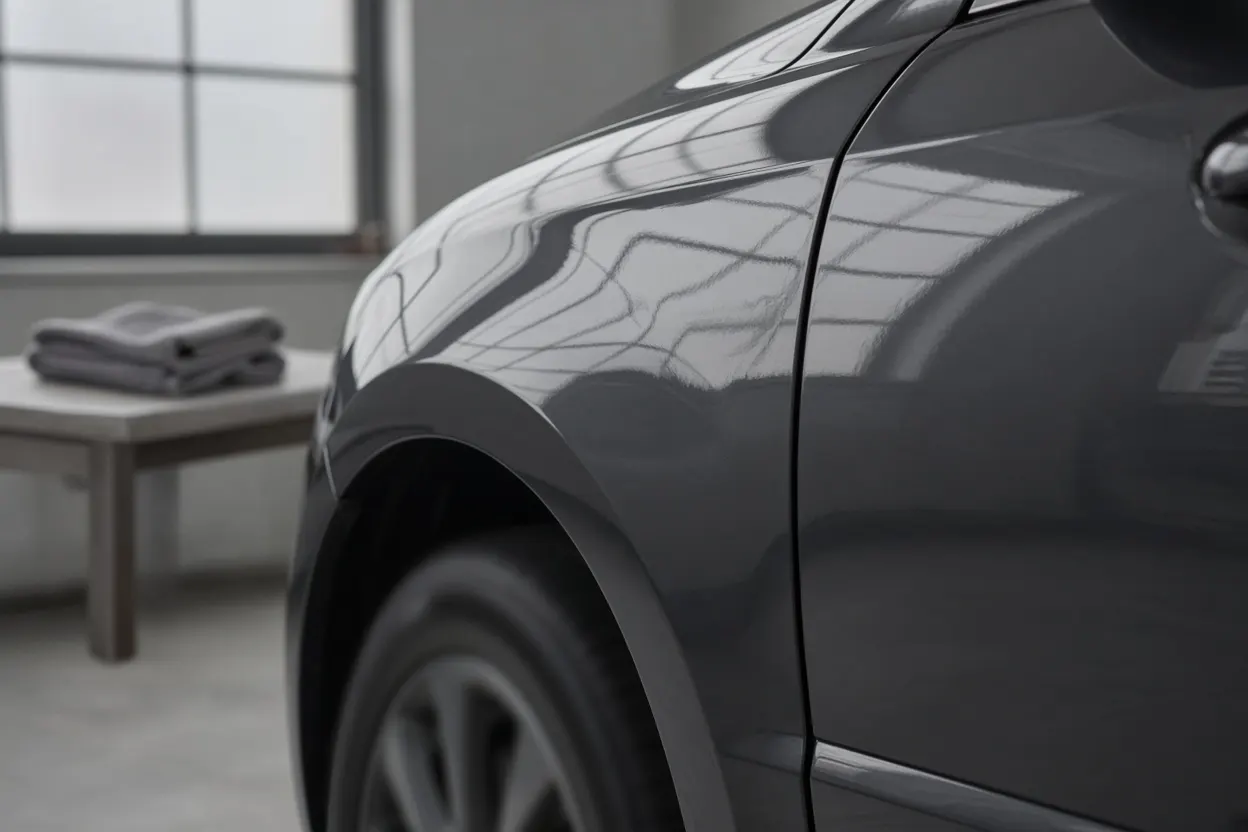
- What the car was worth before the crash, and what it is worth repaired
- Repaired but worth less: diminished value
When a car has been in a crash, it can be worth less than an identical car with no crash on its record, even after a skilled repair. That gap is called diminished value (also "diminution in value"). A repair estimate pays for fixing the car. It does not necessarily pay for that loss in market value.
Whether anyone has to pay for it turns on one question first: whose insurance is the claim against?
- A first-party claim is a claim on your own policy, for example collision coverage.
- A third-party claim is a claim against the person who caused the damage, usually presented to that person's liability insurer.
Your own policy
Claiming on your own policy: Tennessee, Alabama, South Carolina
Courts in these three states have each decided cases about whether the insured's own collision policy pays diminished value on a car that was repaired. In each case we read, the policy's wording decided it.
Tennessee. In Black v. State Farm (2002) the insureds' cars had been repaired and they sued for diminution in value. The policies set the limit of liability as "the lower of: 1. the actual cash value; or 2. the cost of repair or replacement." The Court of Appeals affirmed summary judgment for the insurer, saying that unless the policy language is ambiguous "the court will not construe the policy against the insurer in favor of the insured." [1]
South Carolina. In Schulmeyer v. State Farm (2003) the state Supreme Court answered a certified question: the policy did not oblige the insurer to pay diminished value where the car was properly repaired. The court reasoned that "There is no concept of value in the ordinary meaning of these words" (repair and replace) [2]. The court described the claim as $1,000 in "diminished value" to the vehicle, "which occurred as a result of the accident." [2] It distinguished a Georgia decision that allowed such claims, saying no similar public policy applies to insurance contracts in South Carolina.
Alabama. In Pritchett v. State Farm (2002) the Court of Civil Appeals held that "under the 'repair or replace' language of the insurance policy, State Farm is not required to compensate its insured for any possible difference between the value of the insured automobile before the collision and the value of that automobile after the damage caused by the collision has been repaired." [3] The Alabama Department of Insurance's claims rule for repairs adds that its paragraph on restoring a car "is not intended to and does not create a duty on the insurer to pay for any alleged diminution in value of the automobile." [4]
These are decisions about specific policy language. They do not say what every policy says, and a different policy or an endorsement could read differently. Your own policy is the document to check.
Against the other driver
Claiming against the person who caused the damage
Alabama is the only one of the four where we read a source on this. Pritchett says: "in a third-party tort claim against a defendant, Alabama has recognized diminished value as recoverable." [3] It explains that those third-party cases follow the tort principle that damages should "make the injured party whole" [3]. The Alabama Supreme Court's older statement of the measure is "the difference in value before and after the injury." [5]
For Tennessee, Oklahoma and South Carolina we did not verify a rule for a claim against the at-fault driver, and for Oklahoma we did not verify a rule for the first-party claim either. We left those out rather than guess. An attorney licensed in the state can tell you how its courts treat the question today.
At a glance
What we verified, state by state
| State | On your own policy | Against the at-fault driver |
|---|---|---|
| Tennessee | Not required where the policy limits payment to actual cash value or repair cost (Black, 2002) | Not verified |
| Alabama | Not required (Pritchett, 2002; Insurance Department rule 482-1-125-.08(6)) | Recognized as a measure of property damage in a third-party action (Pritchett, quoting earlier cases) |
| Oklahoma | Not verified | Not verified |
| South Carolina | Not required where the policy limits payment to the lesser of value or cost of repair (Schulmeyer, 2003) | Not verified |
Limits of this page
What this page does not do
We did not run a citator on the Schulmeyer decision or the other court opinions here, so later cases may have changed the details. We do not provide a diminished value calculator, a formula or a claim estimate. We also left out filing deadlines for a property damage claim in each state because we did not verify them; the deadline for an injury lawsuit is separate, and is covered on the deadlines pages. If an insurer's reply seems wrong, see what to do when a claim is denied. If the car was a total loss, see totaled car: what happens.
Want to talk it through? A person usually calls you back in about 15 minutes (8am to 8pm Central). You never pay CrashFirst. CrashFirst is not a law firm, does not evaluate your claim or your car's value and does not give legal advice. General information as of November 9, 2026.
Sources
- Black v. State Farm Mut. Auto. Ins. Co., 101 S.W.3d 427 (Tenn. Ct. App. 2002) (Harvard Caselaw Access Project) (checked November 9, 2026)Court opinion via Harvard CAP“unless and until the language of the policy itself is determined to be ambiguous, the court will not construe the policy against the insurer in favor of the insured”“plain and ordinary meaning is given to the terms of the policy”
- Schulmeyer v. State Farm Fire & Cas. Co., Opinion No. 25612 (S.C. Mar. 24, 2003), South Carolina Judicial Branch (official) (checked November 9, 2026)Official source“There is no concept of value in the ordinary meaning of these words”“which occurred as a result of the accident”“to the vehicle, which occurred as a result of the accident”“The language provision in the present case expressly limits coverage to the lesser of the actual value or the cost of repair”
- Pritchett v. State Farm Mut. Auto. Ins. Co., 834 So. 2d 785 (Ala. Civ. App. 2002) (Harvard Caselaw Access Project) (checked November 9, 2026)Court opinion via Harvard CAP“State Farm is not required to compensate its insured for any possible difference between the value of the insured automobile before the collision and the value of that automobile after the damage caused by the collision has been repaired”“in a third-party tort claim against a defendant, Alabama has recognized diminished value as recoverable”“damages should compensate the injured party for his or her loss or injury and should make the injured party whole”
- Alabama Admin. Code r. 482-1-125-.08, Alabama Department of Insurance (official) (checked November 9, 2026)Official sourceWhere: Rule 482-1-125-.08(6)
- Coffee County Comm'n v. Smith, 480 So. 2d 1194 (Ala. 1985) (Harvard Caselaw Access Project) (checked November 9, 2026)Court opinion via Harvard CAP“the difference in value before and after the injury”
Unofficial copies come from a legal publisher, not the state. They can lag the current code, so check the official code before relying on a date or amount.
Page last updated November 9, 2026. Attorney review pending. General information, not legal advice. Fees, hours and rules change; confirm on the official page. How we source.
Questions
What is a diminished value?
It is the amount a car is worth less after a crash than it would be worth without the crash history, even if repairs were completed well. In Schulmeyer, the plaintiff said his repaired car lost an additional $1,000 in value. The South Carolina Supreme Court described it as a claim for "diminished value" "to the vehicle, which occurred as a result of the accident." [2]
How is diminished value calculated?
There is no single official formula in the four states we cover. Alabama's courts describe the measure of property damage in a claim against the person who caused the loss as "the difference in value before and after the injury." [5] Insurers and appraisers use their own methods, and we do not publish a formula or an estimate.
Can insurance deny a diminished value claim?
On your own policy, the courts we read held that the policy language did not require it. Tennessee: the policy limit was the lower of actual cash value or cost of repair or replacement [1]. South Carolina held the policy "expressly limits coverage to the lesser of the actual value or the cost of repair." [2] Alabama held the same. Your own policy's wording is what matters.
Can I file a diminished value claim myself?
People do file their own claims with an insurer, but we do not tell you whether to file or how much to ask for. Which insurer would be asked depends on whether the claim is on your own policy or against the other driver, and the two are treated differently in Alabama, as described on this page.
Is a diminished value claim worth doing?
We cannot say, and this page does not estimate claim values. What we can show is how the rules differ: on a first-party claim in Tennessee, Alabama and South Carolina the courts we read did not require payment, and in Alabama a claim against the person responsible for the damage is treated differently.
What is a diminished value payout?
It is whatever an insurer or a court awards for the lost value. The amount depends on the facts of the car and the claim, and we do not give figures.
How do I deal with a diminished value claim?
Start by deciding which claim it is: your own policy or a claim against the other driver. If the insurer's answer seems wrong, each state's insurance department takes complaints; see the claim denied guide for the contact pages.
CrashFirst is not a law firm and does not give legal advice. This checklist is general information. Every situation is different.
Keep reading
- Guide
Your car was totaled. Here is what the rules say happens next.
What 'totaled' means, how the state title thresholds differ, and how Tennessee, Alabama, Oklahoma and South Carolina rules say a total-loss settlement is figured. Sourced.
Open - Guide
Car insurance claim denied? What 'bad faith' means and where to complain
What the rules say about denial deadlines, unfair claim practices and 'bad faith' in Tennessee, Alabama, Oklahoma and South Carolina, and where each state's insurance department takes complaints.
Open - Guide
What to do after a crash.
A calm, ordered checklist for the scene, today, the next 72 hours and the next few weeks. Tick it off here or print it for the glove box.
Open - Guide
How are car accident settlements calculated? The factors, not a formula
The factors courts and statutes name when a car accident claim is valued: damages types, fault share and caps in TN, AL, OK and SC. No formula, no dollar estimates. Sourced.
Open - Guide
What is uninsured motorist coverage, and how does it work?
What uninsured and underinsured motorist (UM/UIM) coverage is, and how Tennessee, Alabama, Oklahoma and South Carolina rules read on offer, rejection and limits. Sourced.
Open